
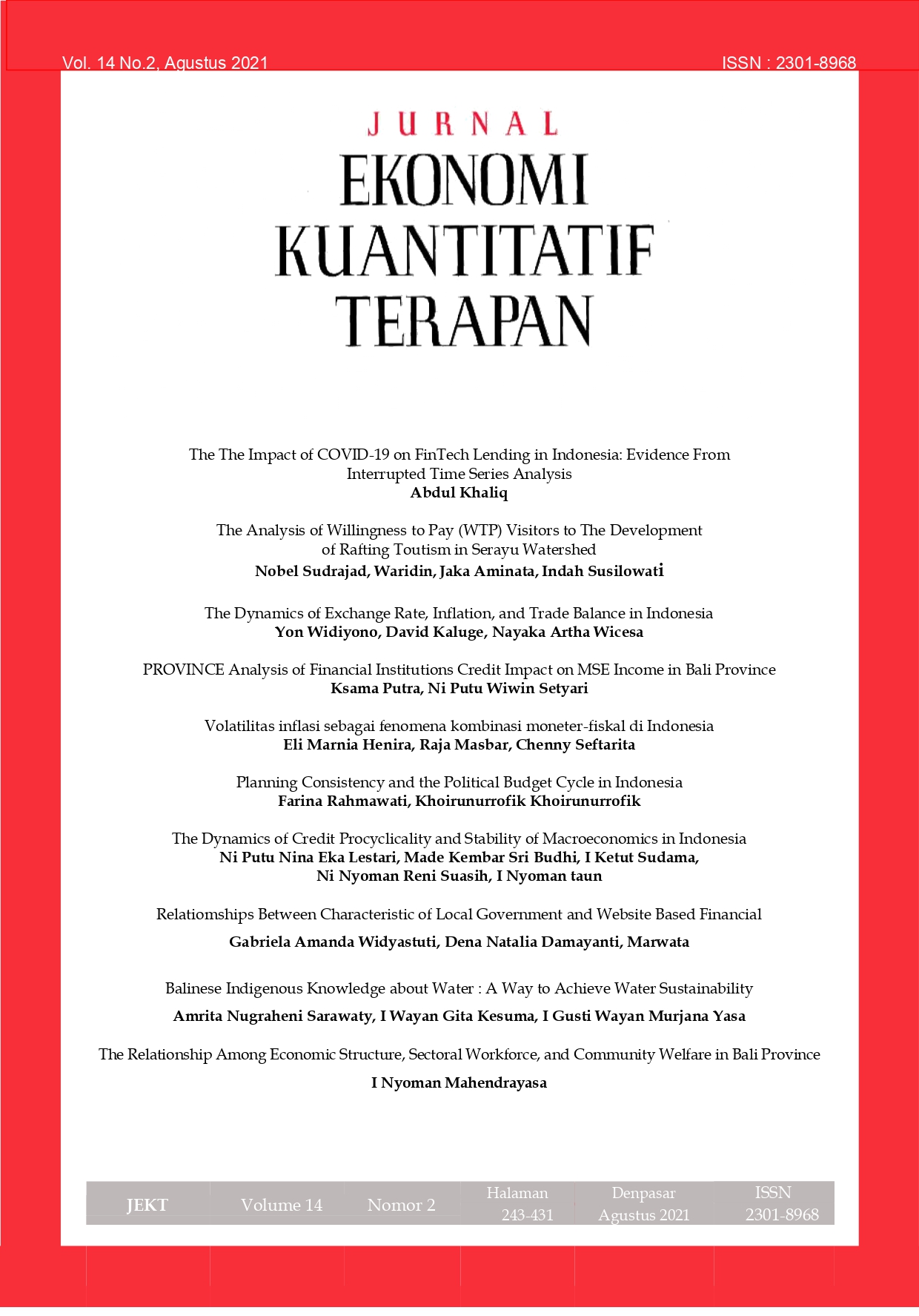
Planning Consistency and the Political Budget Cycle in Indonesia
: Simultaneous Regional Elections in 2017 and 2018
##plugins.pubIds.doi.readerDisplayName##
https://doi.org/10.24843/JEKT.2021.v14.i02.p06
Abstrak
political budget cycle, planning consistency, incumbent, Indonesia, local election.
##plugins.generic.usageStats.downloads##
##plugins.generic.usageStats.noStats##
Referensi
Alesina, A., & Paradisi, M. (2017). Political budget cycles: Evidence from Italian cities. Economics & Politics, 29(2), 157-177.
Bonfatti, A. & Forni, L. (2019). Fiscal rules to tame the political budget cycle: Evidence from Italian municipalities. European Journal of Political Economy, 60, 10–18.
Brender, A. & Drazen, A. (2013). Elections, leaders, and the composition of government spending. Journal of Public Economics, 97, 18–31.
Chortareas, G., Logothetis, V., & Papandreou, A. (2016). Political budget cycles and reelection prospects in Greece’s municipalities. European Journal of Political Economy, 43, 1–13.
Cioffi, M., Messina, G., & Tommasino, P. (2012). Parties, institutions and political budget cycles at municipal level: evidence from Italy. Banca d’Italia working paper, 885.
Drazen, A. & Eslava, M. (2010). Electoral manipulation via voter-friendly spending: Theory and evidence. Journal of Development Economics, 92(1), 39–52.
Eryilmaz, F., & Mercan, M. (2015). POLITICAL BUDGET CYCLES: EVIDENCE FROM TURKEY. Annals of'Constantin Brancusi'University of Targu-Jiu. Economy Series, (2).
Goncalves, S. (2014) The effects of participatory budgeting on municipal expenditures and infant mortality in Brazil. World Development, 53, 94–110.
Gonschorek, G., Schulze, G., & Sjahrir, B. S. (2018). To the ones in need or the ones you need? The political economy of central discreationary grants empirical evidence form Indonesia. European Journal of Political Economy, 54, 240–260.
Gujarati, D. N., Porter, D. C., & Gunasekar, S. (2012). Basic econometrics. Tata McGraw-Hill Education.
Kis-Katos, K. & Sjahrir, B. S. (2017). The impact of fiscal and political decentralisation on local public investment in Indonesia. Journal of Comparative Economics, 45, 344–365.
Klein, F. A., & Sakurai, S. N. (2015). Term limits and political budget cycles at the local level: evidence from a young democracy. European Journal of Political Economy, 37, 21-36..
Kurunmaki, L. & Miller, P. (2011). Regulatory hybrids: Partnership, budgeting, and modernising government. Management Accounting Research, 22(4), 220–241.
Lee, S. (2014). The impact of the Korean preliminary feasibility study on budgetary decisions (A Thesis Submitted for the Degree of Doctor of Philosophy, University of Birmingham, UK). http://etheses.bham.ac.uk/id/eprint/5179/1/Lee14PhD.pdf
Lewis, B. & Hendrawan, A. (2019). The impact of majority coalitions on local government spending, service delivery and corruption in Indonesia. European Journal of Politic Economics, 58, 178–191.
Nordhaus, W. (1975). The political business cycle. Review of Economic Studies, 2, 169–190.
Pierskalla, J. H. & Sacks, A. (2018). Unpaved road ahead: The consequences of election cycles for capital expenditure. Journal Politics, 80(2), 510–524.
Potrafke, N. (2010). The growth of public health expenditures in OECD countries: do government ideology and electoral motives matter?. Journal of Health Economics, 29(6), 797-810.
Rogoff, K. (1990). Equilibrium political budget cycles. The American Economic Review, 80(1), 21–36.
Sanchez, F. C. (2007). Incentives for budget discipline in the presence of elections. European Journal of Political Economy, 23(4), 863–884.
Sjahrir, B. S., Kis-Katos, K. & Schulze, G. G. (2013). Political budget cycles in Indonesia at the district level. Economics Letters, 120(2), 342–345.
Sjahrir, B. S., Kis-Katos, K. & Schulze, G.G. (2014). Administrative overspending in Indonesian districts: The role of local politics. World Development, 59, 166–183.
Skoufias, E., Narayan, A., Dasgupta, B., & Kaiser, K. (2014). Electoral accountability and local government spending in Indonesia. Washington DC: World Bank.
Wiguna, G. E., & Khoirunurrofik, K. Political budget cycle patterns and the role of coalition parties in shaping Indonesian local government spending. Asia-Pacific Journal of Regional Science, 1-24. https://doi.org/10.1007/s41685-02
Bonfatti, A. & Forni, L. (2019). Fiscal rules to tame the political budget cycle: Evidence from Italian municipalities. European Journal of Political Economy, 60, 10–18.
Brender, A. & Drazen, A. (2013). Elections, leaders, and the composition of government spending. Journal of Public Economics, 97, 18–31.
Chortareas, G., Logothetis, V., & Papandreou, A. (2016). Political budget cycles and reelection prospects in Greece’s municipalities. European Journal of Political Economy, 43, 1–13.
Cioffi, M., Messina, G., & Tommasino, P. (2012). Parties, institutions and political budget cycles at municipal level: evidence from Italy. Banca d’Italia working paper, 885.
Drazen, A. & Eslava, M. (2010). Electoral manipulation via voter-friendly spending: Theory and evidence. Journal of Development Economics, 92(1), 39–52.
Eryilmaz, F., & Mercan, M. (2015). POLITICAL BUDGET CYCLES: EVIDENCE FROM TURKEY. Annals of'Constantin Brancusi'University of Targu-Jiu. Economy Series, (2).
Goncalves, S. (2014) The effects of participatory budgeting on municipal expenditures and infant mortality in Brazil. World Development, 53, 94–110.
Gonschorek, G., Schulze, G., & Sjahrir, B. S. (2018). To the ones in need or the ones you need? The political economy of central discreationary grants empirical evidence form Indonesia. European Journal of Political Economy, 54, 240–260.
Gujarati, D. N., Porter, D. C., & Gunasekar, S. (2012). Basic econometrics. Tata McGraw-Hill Education.
Kis-Katos, K. & Sjahrir, B. S. (2017). The impact of fiscal and political decentralisation on local public investment in Indonesia. Journal of Comparative Economics, 45, 344–365.
Klein, F. A., & Sakurai, S. N. (2015). Term limits and political budget cycles at the local level: evidence from a young democracy. European Journal of Political Economy, 37, 21-36..
Kurunmaki, L. & Miller, P. (2011). Regulatory hybrids: Partnership, budgeting, and modernising government. Management Accounting Research, 22(4), 220–241.
Lee, S. (2014). The impact of the Korean preliminary feasibility study on budgetary decisions (A Thesis Submitted for the Degree of Doctor of Philosophy, University of Birmingham, UK). http://etheses.bham.ac.uk/id/eprint/5179/1/Lee14PhD.pdf
Lewis, B. & Hendrawan, A. (2019). The impact of majority coalitions on local government spending, service delivery and corruption in Indonesia. European Journal of Politic Economics, 58, 178–191.
Nordhaus, W. (1975). The political business cycle. Review of Economic Studies, 2, 169–190.
Pierskalla, J. H. & Sacks, A. (2018). Unpaved road ahead: The consequences of election cycles for capital expenditure. Journal Politics, 80(2), 510–524.
Potrafke, N. (2010). The growth of public health expenditures in OECD countries: do government ideology and electoral motives matter?. Journal of Health Economics, 29(6), 797-810.
Rogoff, K. (1990). Equilibrium political budget cycles. The American Economic Review, 80(1), 21–36.
Sanchez, F. C. (2007). Incentives for budget discipline in the presence of elections. European Journal of Political Economy, 23(4), 863–884.
Sjahrir, B. S., Kis-Katos, K. & Schulze, G. G. (2013). Political budget cycles in Indonesia at the district level. Economics Letters, 120(2), 342–345.
Sjahrir, B. S., Kis-Katos, K. & Schulze, G.G. (2014). Administrative overspending in Indonesian districts: The role of local politics. World Development, 59, 166–183.
Skoufias, E., Narayan, A., Dasgupta, B., & Kaiser, K. (2014). Electoral accountability and local government spending in Indonesia. Washington DC: World Bank.
Wiguna, G. E., & Khoirunurrofik, K. Political budget cycle patterns and the role of coalition parties in shaping Indonesian local government spending. Asia-Pacific Journal of Regional Science, 1-24. https://doi.org/10.1007/s41685-02
Diterbitkan
2021-08-23
##submission.howToCite##
KHOIRUNURROFIK, Khoirunurrofik; RAHMAWATI, Farina.
Planning Consistency and the Political Budget Cycle in Indonesia.
Jurnal Ekonomi Kuantitatif Terapan, [S.l.], p. 327-350, aug. 2021.
ISSN 2303-0186.
Tersedia pada: <http://103.29.196.112/index.php/jekt/article/view/74442>. Tanggal Akses: 04 mar. 2026
doi: https://doi.org/10.24843/JEKT.2021.v14.i02.p06.
Bagian
Articles


